Inside the Practice
The Sivananda Basic Open Class
A closer look at the practice and the benefits.
Every Sivananda class anywhere in the world follows the same shape, and it is the same shape in all four of our Gurgaon centres and in the live online classes. What follows is that sequence in full, with the reason behind each element. If you would rather just come and be taught it, the first class is free.
Initial relaxation
The practice always begins with a few minutes of relaxation. These few minutes can make the difference between having a good session, and a session where you are not satisfied with your practice. During this time, the body has a chance to prepare itself for the practice and the mind can concentrate on the task ahead. The breathing also calms down and becomes more rhythmic, regulating and concentrating the prana (energy). slowly you bring your awareness and attention to the practice, away from your daily cares and concerns. In this way, your session becomes highly productive and beneficial.
Invocation
We start the yoga class with an invocation, an initial prayer to the higher energies. This is another way of focusing the attention on the practice through the power of mantras.
Kapalabhati
- The first set of practices are centred around breathing.
- The first breathing exercise is kapalabhati.
- kapala in Sanskrit, means skull
- bhati means shining
- It is a series of short, sharp, forced exhalations from the nostrils
- The abdomen moves towards the spine during exhalation
- Due to the abdomen’s movement, the diaphragm, the muscular tissue under the lungs, moves upwards towards the lungs
- This forces the breath out of the lungs, emptying it of carbon dioxide, impurities and other toxins
- The abdomen then relaxes
- This releases the diaphragm away from the lungs
- Automatically fresh air enters the lungs to fill the vacuum created
- We do three rounds of kapalabhati
- Each round consists of 60, 70, or a maximum of 80 pumpings
- The breath is retained briefly at the end of each round
- Kapalabhati clears the sinuses
- It opens up the breathing passages
- It invigorates and improves the functioning of the lungs
- It stimulates all the abdominal organs and improves digestion and assimilation of nutrients
- It also improves the functioning of the hormonal glands, and brings a glow to the face, thereby justifying the name
Anuloma Viloma (Alternate nostril breathing)
- Alternate nostril breathing is a pranayama
- The left hand is kept on the left knee in chin mudra
- The right hand is kept in vishnu mudra
- This is done by folding the index and ring finger into the base of the thumb
- You use the thumb to block the right nostril, and the last two fingers to block the left nostril
- The breathing is done alternately with each nostril
- The ratio is 1:4:2
- You breathe in to a count of 4
- You retain the breath for a count of 16
- And you breathe out from the opposite nostril on a count of 8
- The practice always begins by breathing in from the left nostril
- It always ends by breathing out from the left nostril
- Anuloma Viloma calms the mind
- it purifies all the nadis or astral channels
- it balances the activities of the left and right hemispheres of the brain
- it brings about physical, mental and emotional balance
- we do six to eight rounds of alternate nostril breathing in a session
Surya Namaskar (Sun salutation)
- Basic set of twelve postures, or asanas
- Strung together in a sequence.
- Done before any asana practice
- Aims to warm up the body and awaken the energy.
- Do a minimum of six rounds
- or twelve sets, one starting on the left leg and one on the right leg
Leg raising exercises
- Helps to strengthen abdomen
- Stretches hamstrings
- Keep the knees straight
- Single leg raises help to loosen up the leg muscles, stretching and toning them
- When doing double leg raises, keep your hands under the thighs, palms facing down, if you have a weak or tender lower back
- Avoid double leg raises if you have chronic back pain or slipped disc
Shashankasana (Child’s pose)
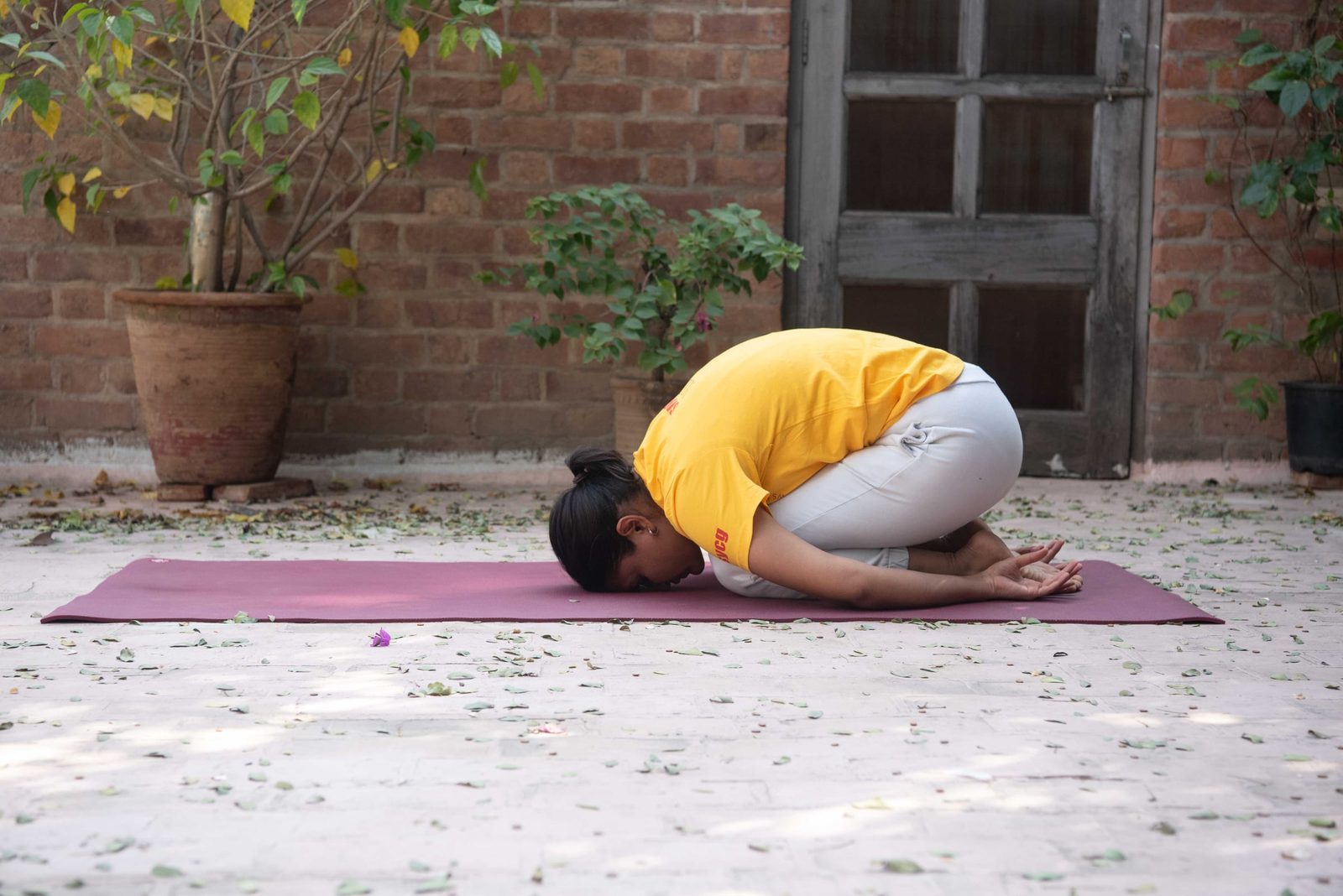
- Preparatory pose for the headstand
- Relax and breathe in the pose
- Wonderful asana to remove stress
- Brings a glow to the face
- Improves digestion, memory and eyesight
- Removes mental and physical tiredness
Sirsasana (Head stand)
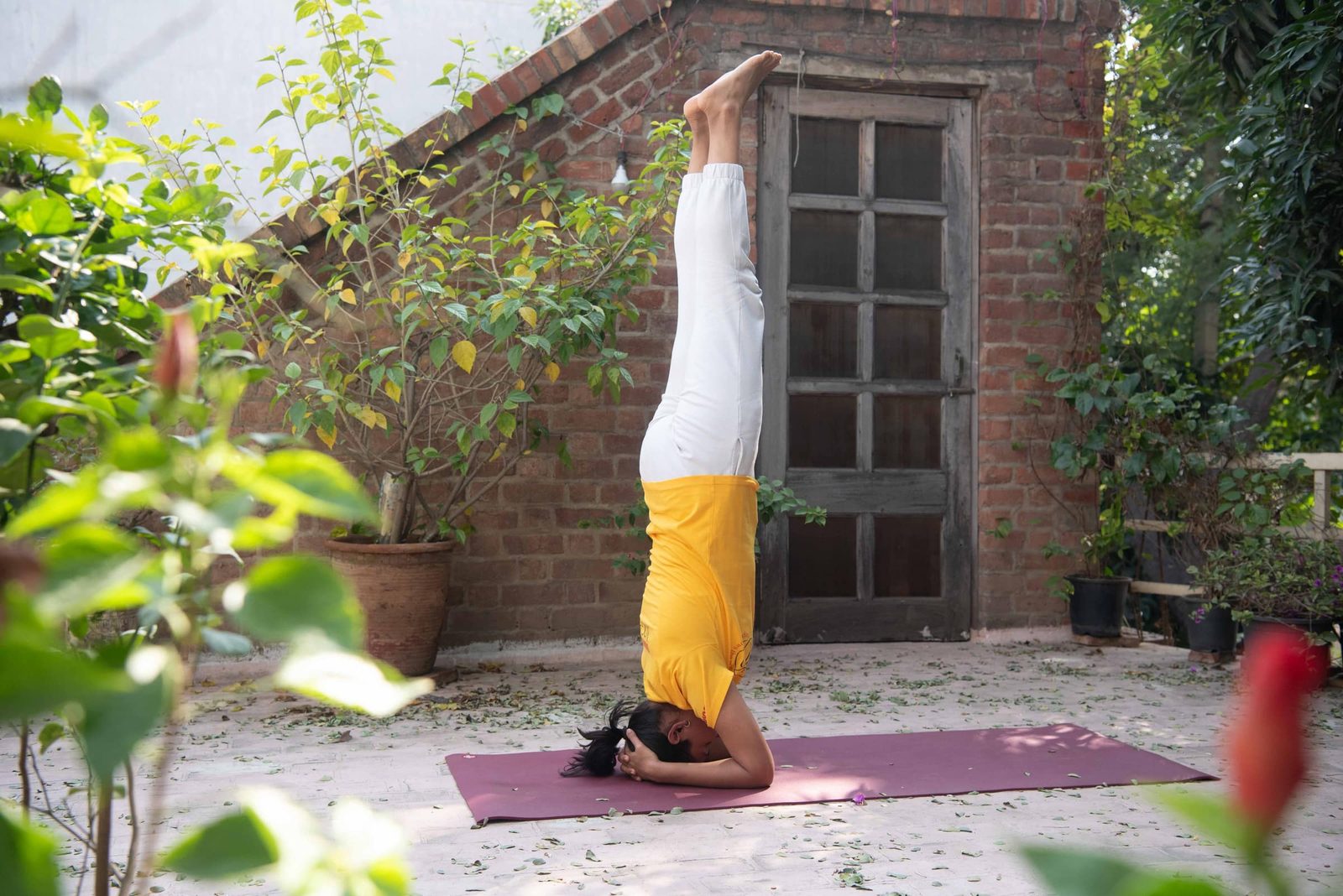
- Invigorates the entire body
- Refreshes the brain
- Stimulates the hormonal glands
- Improves memory, eyesight, concentration and overall health by Balancing the body, mind, emotions and spirit
- Take the eight steps
- Always do in the middle of the room away from obstructions
- Learn with a teacher until you have experience
- Have the body weight evenly distributed on the forearms, and the crown of the head
- Be still, and hold for a maximum of three minutes
- Breathe deeply, and with awareness, keeping eyes closed if necessary
- Come out of the pose whenever you feel uncomfortable, tired or unable to breathe properly
- Do not do if you have a detached retina, glaucoma, high blood pressure, heart ailment or any medical condition requiring the advice of a doctor
- Do not practice during the menstrual period
Sarvangasana (Shoulderstand)
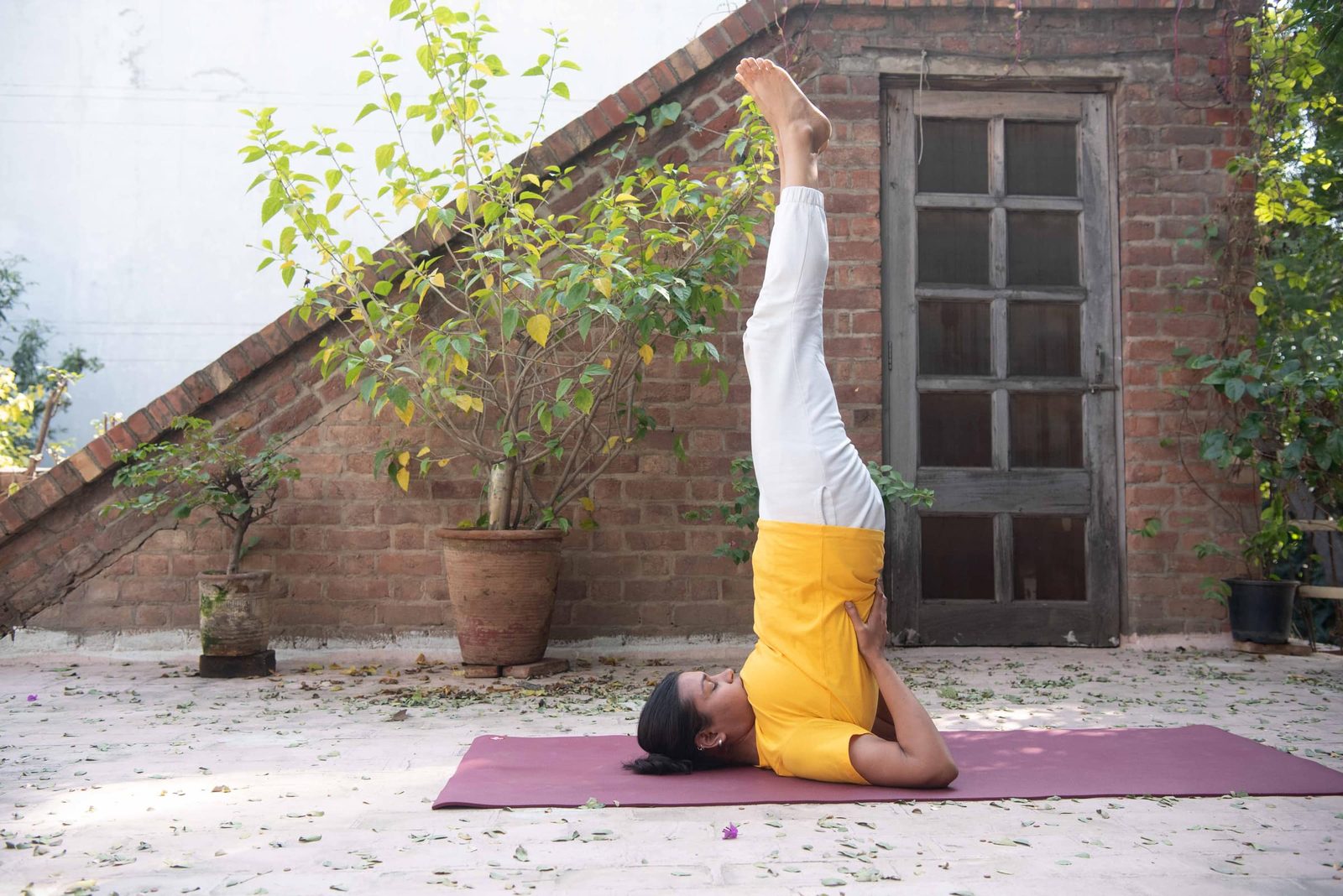
- Queen of the asanas
- Stimulates thyroid and parathyroid glands
- Deeply relaxing and refreshing
- Quells anxiety
- Come into the asana smoothly, avoiding jerks
- Stay only as long as comfortable
- Transfer maximum weight of the body onto the shoulders
- Initially weight may be on the arms and elbows
- Slowly with practice heels, hips and shoulder blades will form one line
- Breathe deeply, and with awareness, keeping eyes closed if necessary
- Be still, and hold for a maximum of three minutes
- Come out of the pose whenever you feel uncomfortable, tired or unable to breathe properly
- Avoid if you have chronic back pain, until you have strengthened your back
- Do not practice if you have cervical pain, or back, or heart condition requiring medical advice
- Do not practice during the menstrual period
Halasana (Plough)
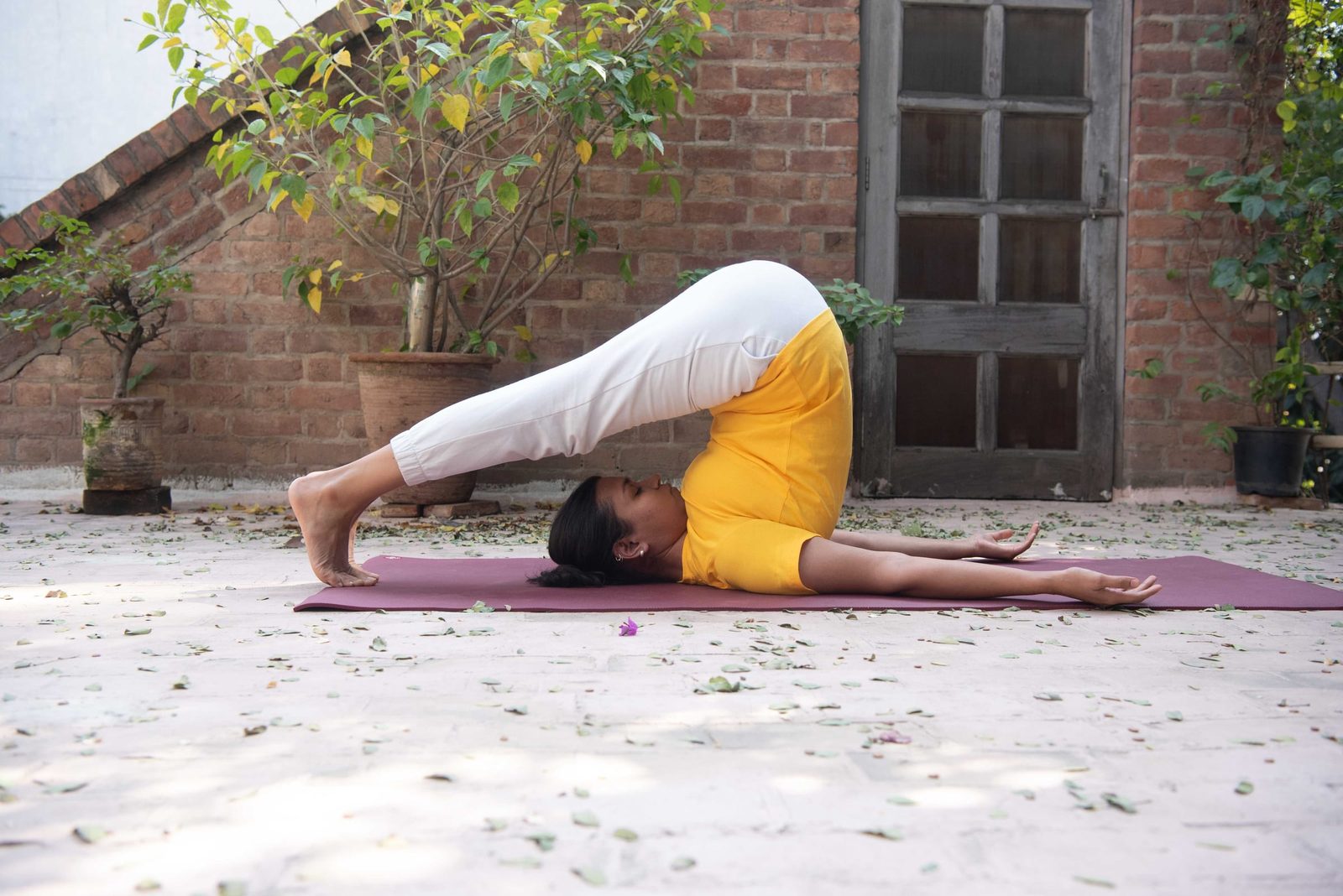
- First lower one leg at a time behind your head
- Always keep both knees straight
- Keep your hands supporting the back
- Lower each leg only upto a point where you can hold without discomfort
- Do not have a target for getting the toes to touch the floor
- Now lower both legs down
- Keep supporting your back
- If your toes touch the ground behind your head comfortably, then release your hands from the back
- Keep your hands relaxed on the ground or interlock them
- hold the pose for a maximum of two minutes or until you feel comfortable
- Breathe deeply, and with awareness, keeping eyes closed if necessary
- Plough or Halasana intensifies the benefits of the Shoulderstand, Sarvangasana
- Gives a good stretch to the back
- Stimulates the abdominal organs
- Improves digestion
- Stretches the hamstring muscles
- Quells anxiety
Matsyasana (Fish)
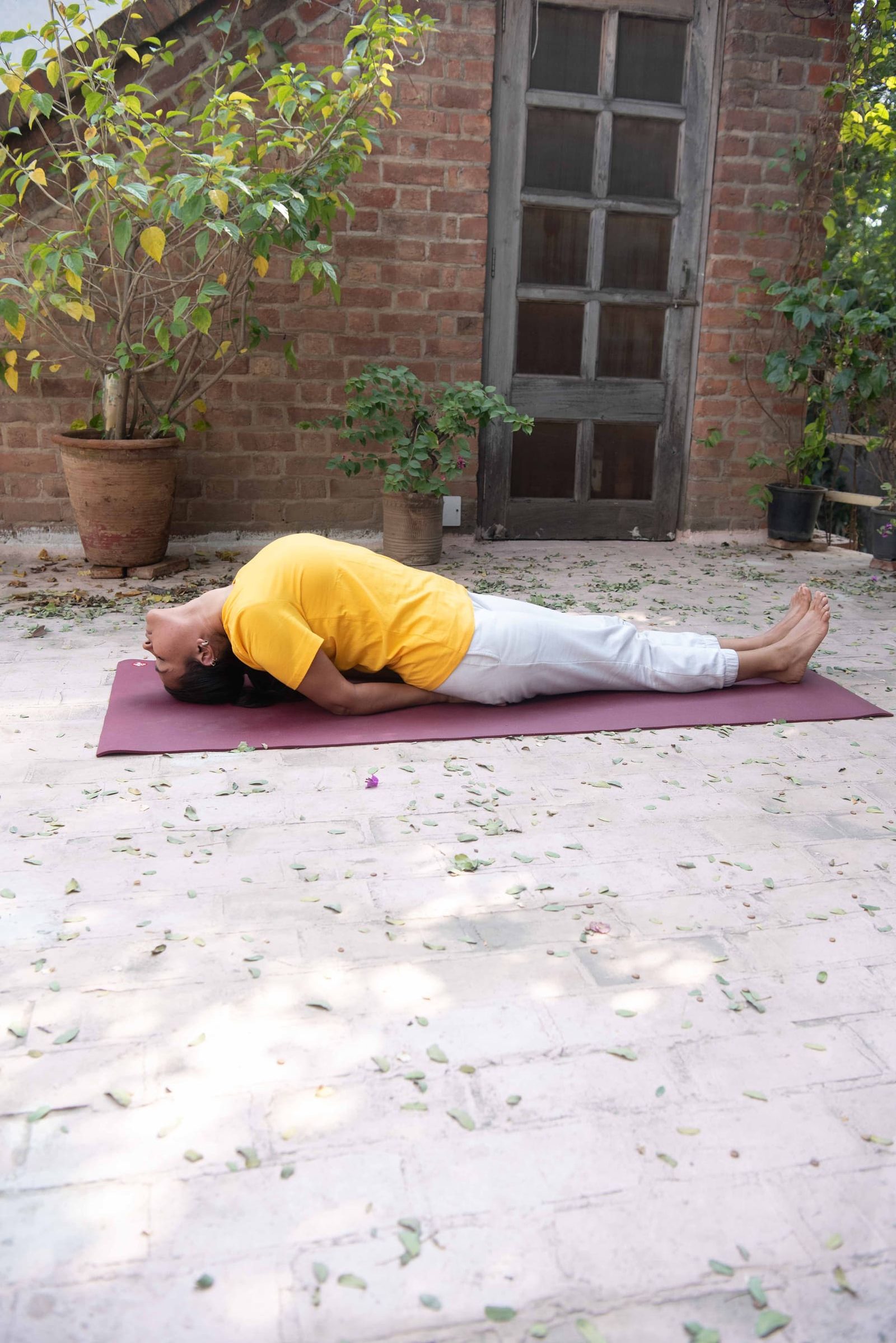
- Fish, or Matsyasana is a counter pose for the Shouldersatnd and the Plough
- Bring your hands under your thighs
- Keep your elbows under the lower back, close together
- Keep your arms extended as much as possible
- Lift your chest and shoulders off the ground
- Tilt your head back
- Keep the crown of the head on the floor
- Hold and breathe deeply, and with awareness, keeping eyes closed if necessary
- Retain the posture for about a minute, or quarter of the duration that you hold the shoulder stand
- Intake of oxygen and removal of carbon dioxide is maximized as the chest is open in the pose
- Stimulates thyroid and parathyroid glands
- Removes tiredness around the shoulders
- Therapeutic for the upper back
Paschimottanasana (Sitting forward bend)
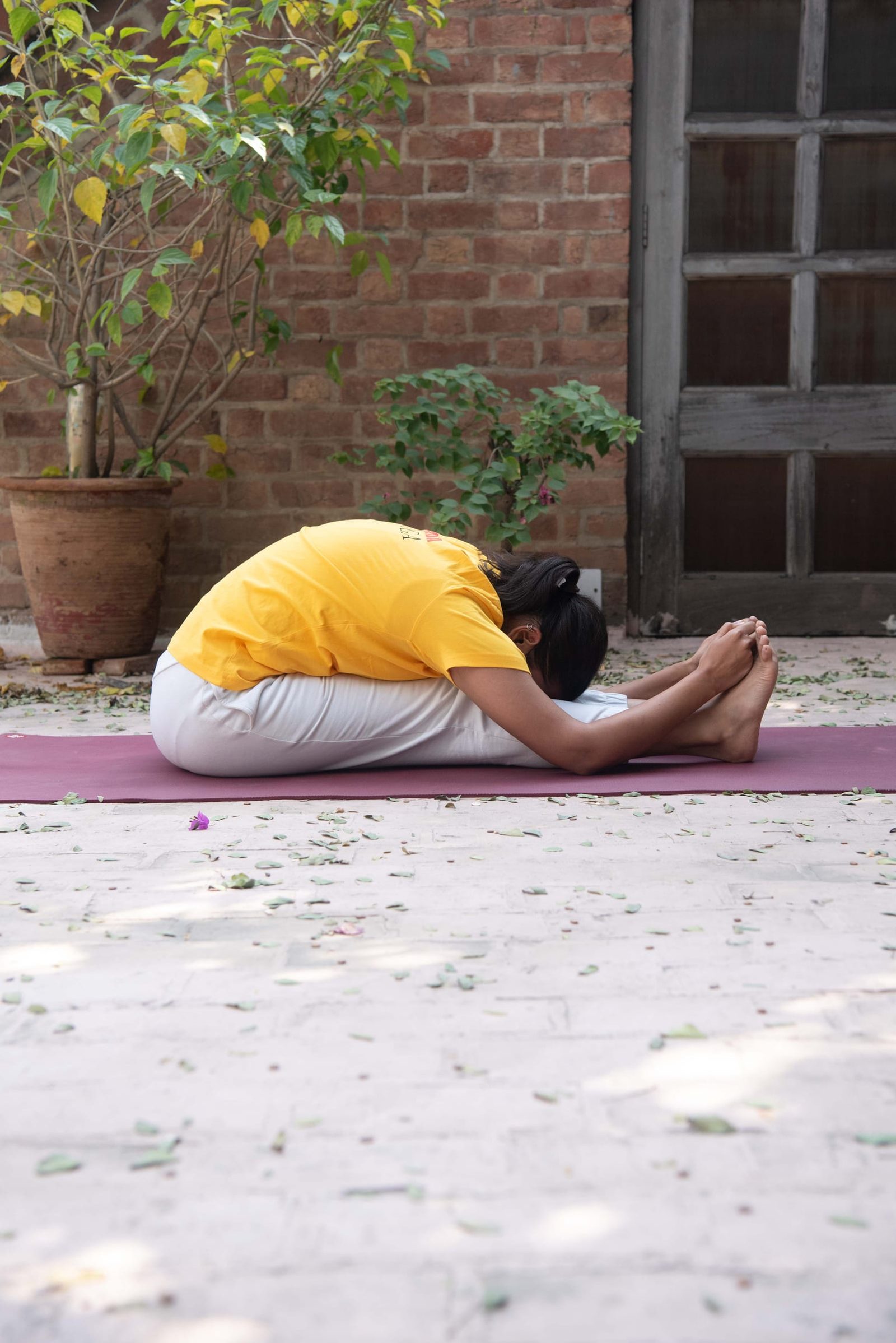
- Keep the legs stretched out in front
- Keep the back of the knees firmly on the ground
- Keep the toes bent towards you
- Stretch the arms up and bend forward
- Hold any part of the leg that is comfortable
- Breathe deeply, and with awareness, keeping eyes closed if necessary
- Hold for about tow to three minutes or as long as comfortable
- The asana alleviates digestive problems
- Helps to reduce fat from the waist
- Stretches the back
- Quells anxiety, and removes stress
- Stretches and tones the muscles of the legs, especially the hamstrings
- Do not practice if you have chronic lower back pain, sciatica, lumbago or a slipped disc without the express consent of a specialist medical practitioner or a qualified yoga teacher
Purvottanasana (Inclined plane)
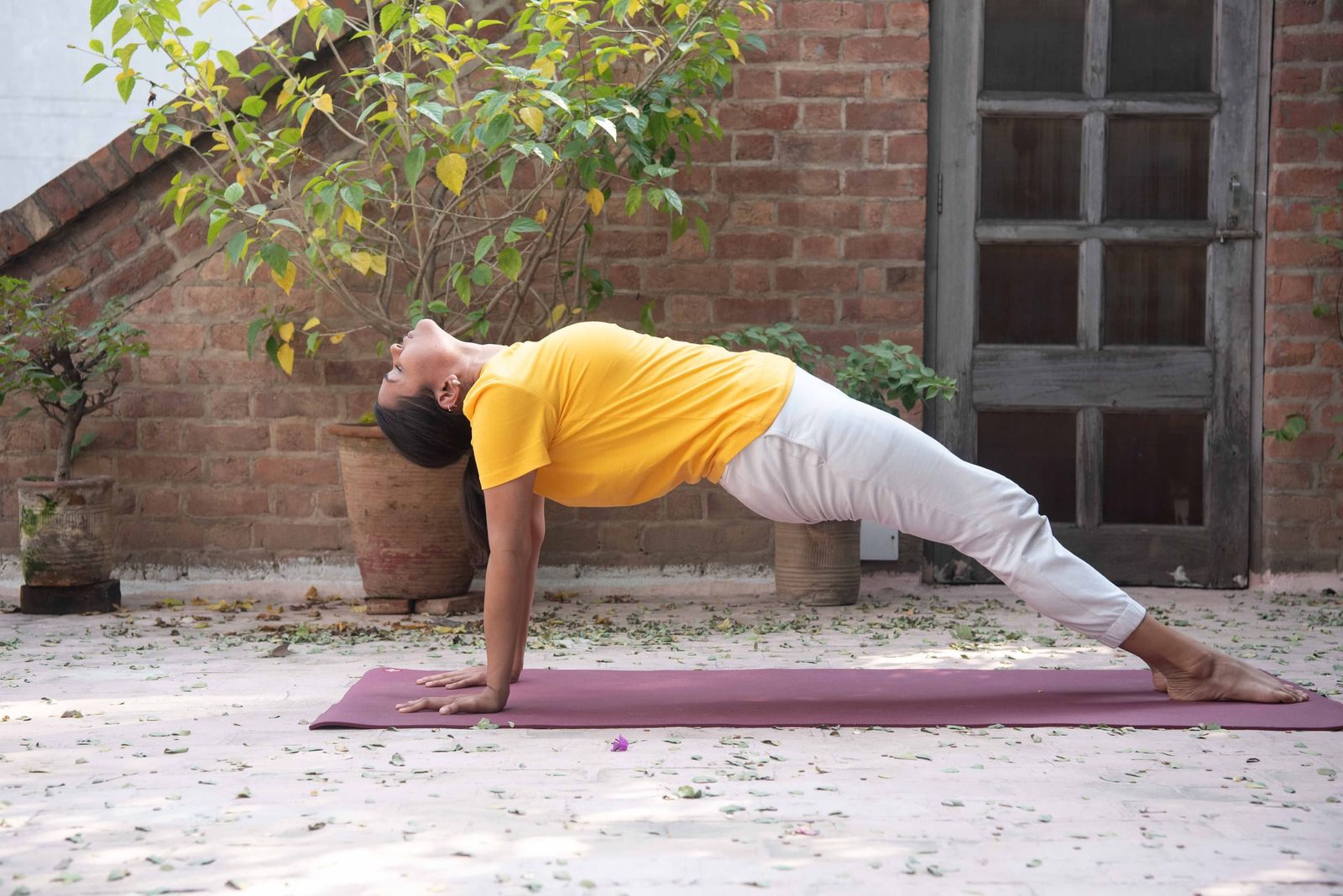
- Is a gentle but effective counter stretch for the lower back after the forward bend
- Breathe deeply, and with awareness, keeping eyes closed if necessary
- Hold for ten to fifteen seconds
Bhujangasana (Cobra)
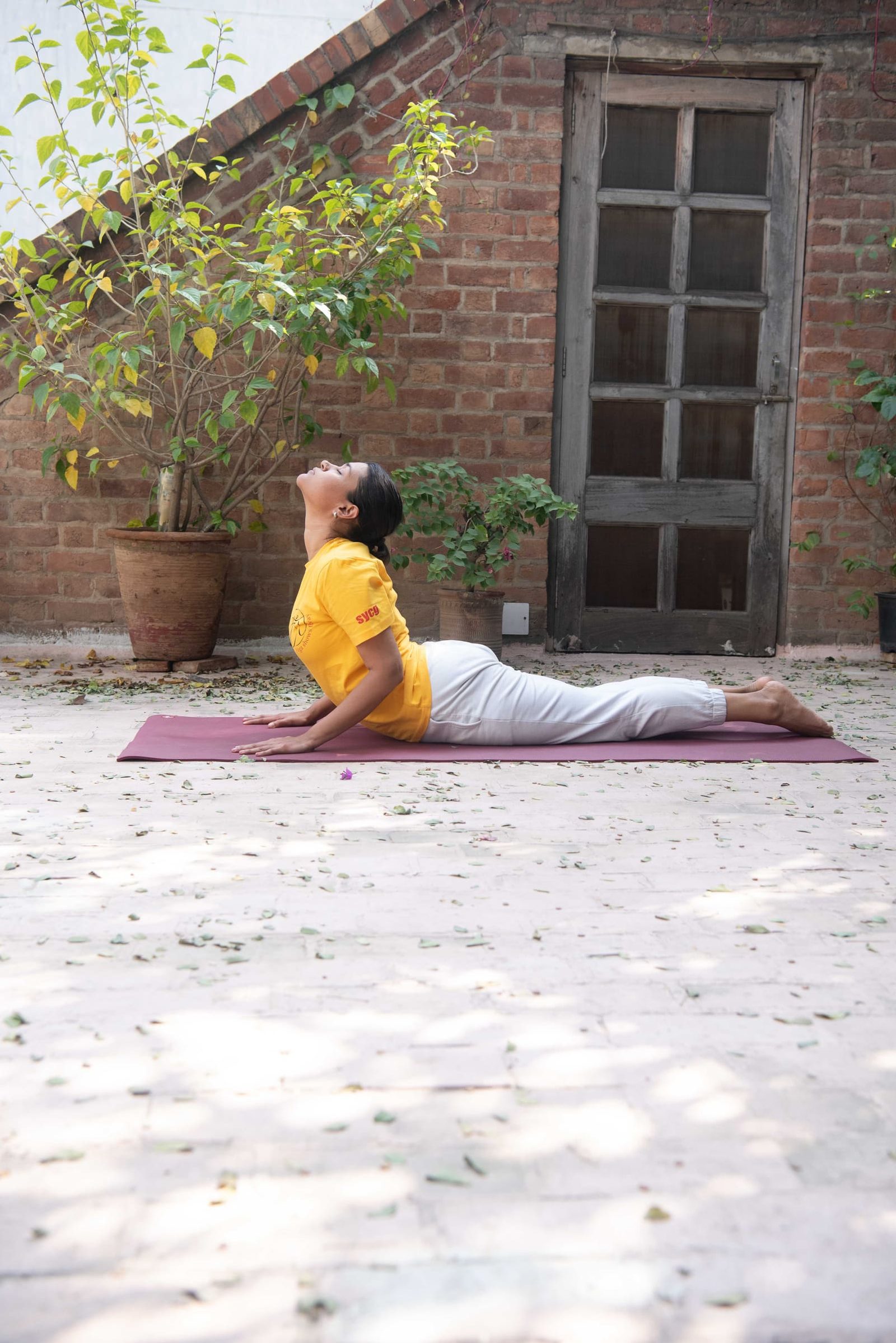
- The backbends start with the Cobra, Bhujangasana
- Keep the forehead on the ground
- Keep your hands next to the shoulders, and the arms tucked into the body
- Keep the heels together
- As you inhale bring your head, shoulders and chest off the ground
- It is important to keep the heels and toes touching, and the arms tucked in to the body
- Keep the shoulders relaxed and away from the ears
- Keep the face relaxed
- Hold the pose, and breathe deeply, and with awareness, keeping eyes closed if necessary
- Stay in the posture for 30 to 45 seconds
- The Cobra helps alleviate back pain
- It removes tiredness around the upper back and shoulderblades brought about by constant sitting, driving and work on the computer
- It strengthens the arms, wrists and shoulders
- By opening the chest area, it helps the breath to become deeper and improves the function of the lungs and the heart
Shalabhasana (Locust)
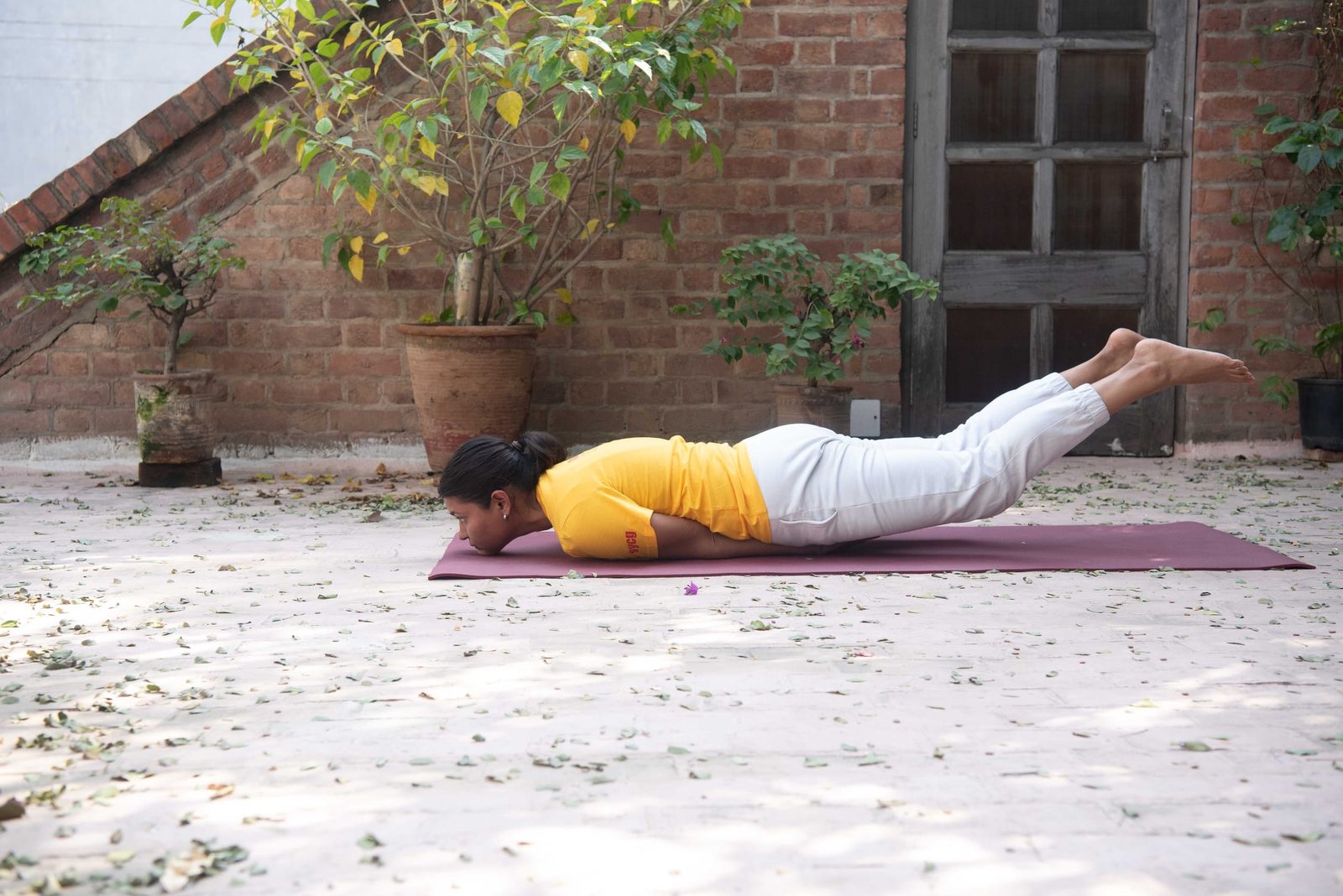
- This is one of the more difficult asanas in the sequence
- If you have chronic backache, or a slipped disc, or sciatica or any long-standing back problem, it is best to let the back become stronger with other practices in the sequence before attempting the locust
- Keep your arms closely underneath the abdomen
- Hands in any appropriate and comfortable position
- Keep the chin on the ground
- Begin by raising one leg at a time
- Do not rotate the hips
- When you lift both legs up, lift them just to the point that you can breathe deeply, and comfortably and with awareness
- Hold the posture for 15 to 30 seconds
Dhanurasana (Bow)
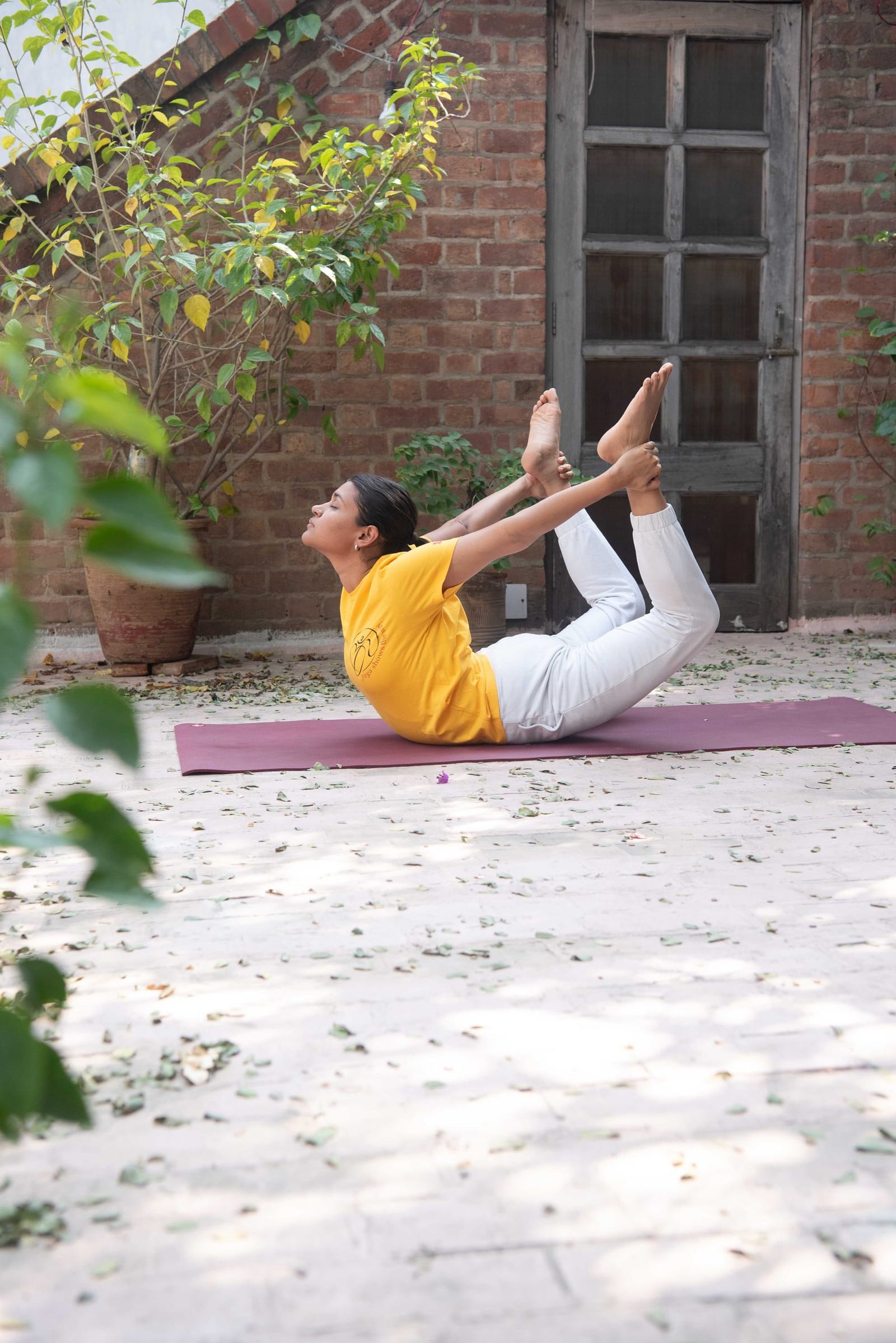
- The final backward bend in the sequence
- Keep the knees separated so that you can hold the ankles, and not the foot
- Lift your head, shoulders, chest, knees and thighs off the ground
- Hold and breathe deeply, and with awareness
- Keep eyes closed if necessary
- Stay in the pose for 30 to 45 seconds
- The bow relieves constipation
- It helps reduce upper and lower back pain
- Improves the breathing capacity
- Increases the cardiovascular activity
- Strengthens the arms and shoulders
- In the beginning you may not be able to get the knees off the ground
- Sometimes you may not be able to reach your ankles with your hands
- Allow the body to become more flexible with the regular practice of other asanas in the sequence, and you will be able to practice the bow also comfortably
Ardh Matseyendrasana (Half spinal twist)
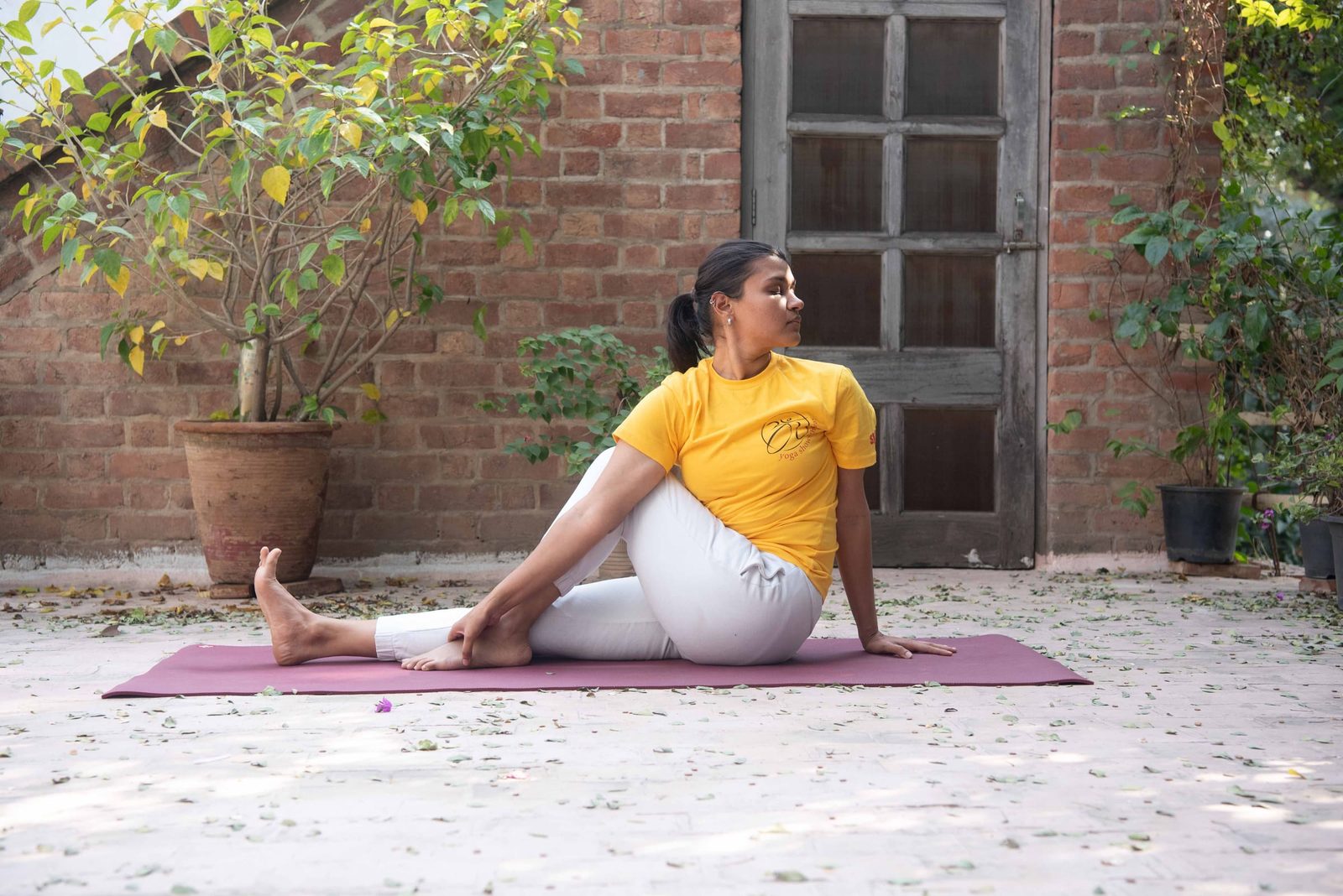
- A lateral stretch for your entire spine
- After inverting the spine, bending forward and back, the spine is given a lateral twist to retain its complete range of mobility
- The pose allows more nourishment to reach the roots of the spinal nerves and the sympathetic nervous system
- It also stimulates the abdominal organs
- Cleanses all internal organs by gently kneading out venous blood and toxins
- Remember to sit on both buttocks
- Keep the rear hand behind you in line with the spine on the ground
- Look over the shoulder and not at the ground or tilt your head backwards
Kakasana (Crow)/Mayurasana (Peacock)
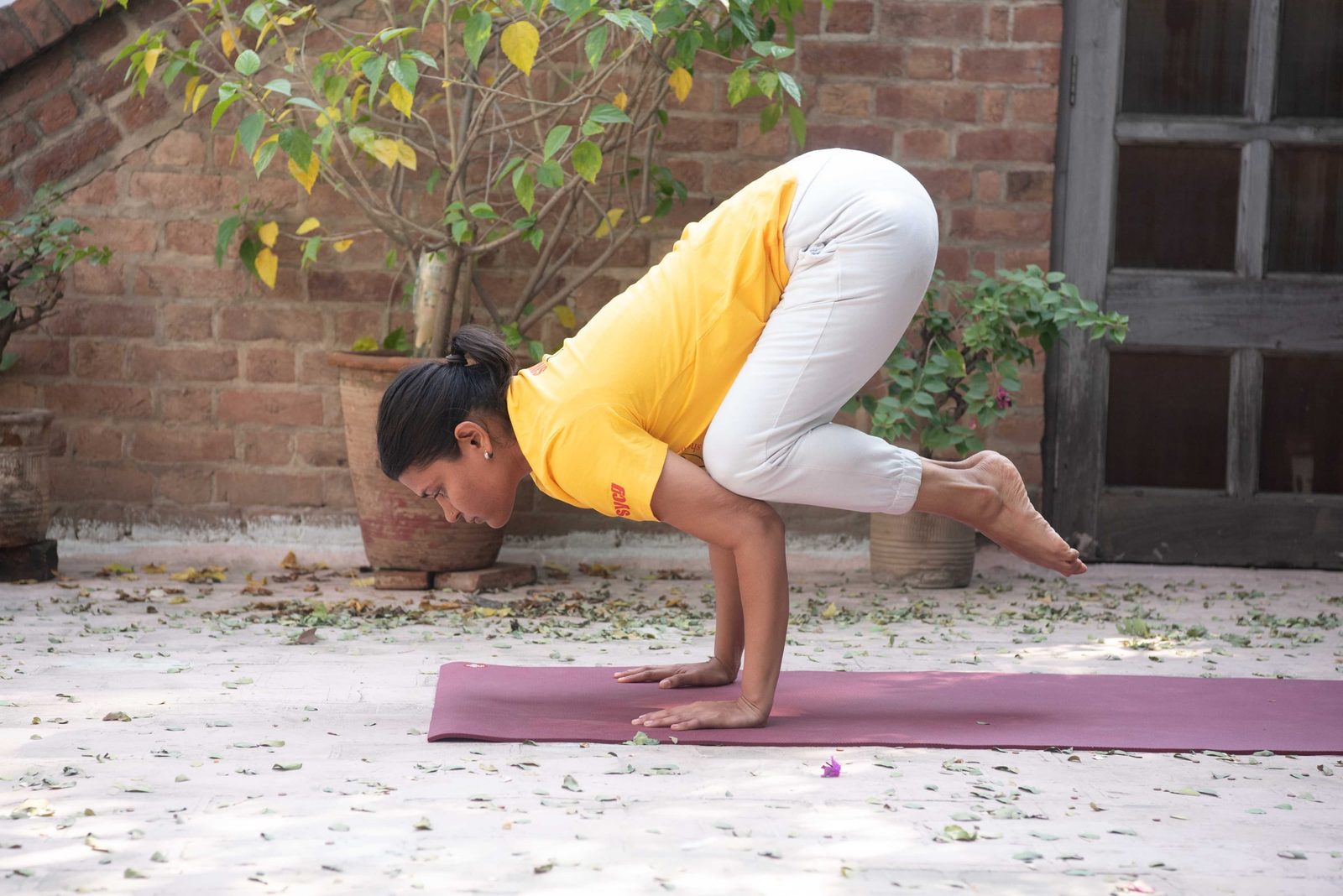
- These two balancing pose requires a little strength, a little skill and a whole lot of confidence
- All balancing poses provide physical, mental and emotional balance and stability
- Be careful when you practice the crow, keep a cushion in front of you if Necessary
- Learn both balancing poses with a teacher first, if possible
- Hold the poses as long as comfortable, breathing with ease and awareness
Padahasthasana (Standing forward bend)
- Like the sitting forward bend, keep the knees straight, and locked
- Reach down and hold any part of the leg that you can hold comfortably
- Relax the shoulders, arms, neck and face
- Hold for about a minute and a half, breathing deeply, and with awareness
- Inverting the torso provides some of the benefits of the other inverted poses
- The brain and hormonal glands are stimulated by a fresh supply of blood and oxygen
- The face and eyes receive excellent nourishment
- The back of the legs and the entire back gets a good stretch
- The mind is calmed
Trikonasana (Triangle)
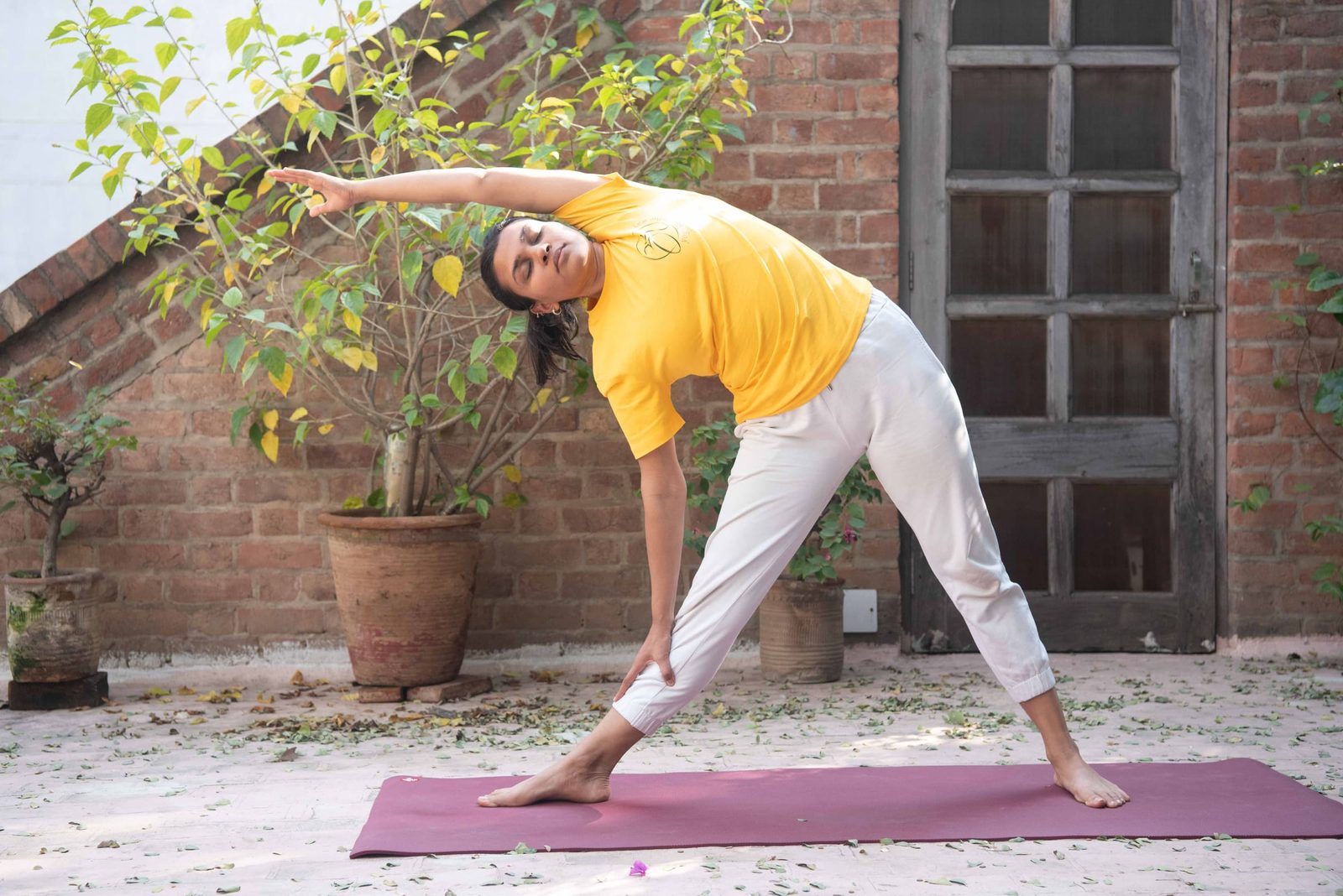
- The 12th and final asana in the sivananda class sequence
- Provides a lateral stretch to the spine
- Keep the legs more than shoulder width apart
- Bend sideways only up to a point where you can breathe comfortably and with awareness
Savasana (Final relaxation)
- The most important part of the class
- Integrates the benefits of the whole practice
- The best way to practice final relaxation is to be completely still for about 10 minutes
- Through auto-suggestion, give a mental command to each part of the body to relax
- Relax the internal organs
- Withdraw your senses
- Calm down the conscious and subconscious mind
- Rest in stillness, silence and peace
- To finish, bring your awareness back to the present slowly
- Take your time
- Move your toes and feet
- Move your arms and legs and head from side to side
- Breathe a little more deeply
- Stretch
- Turn to one side and sit up with your eyes closed
Final prayer
The Shanti (or peace) mantras are meant to generate peaceful vibrations for the student and also for the entire universe. It is a prayer of harmony, serenity and peace, and a beautiful way to end your practice. The mantras are chosen from many vedas for their healing properties and have been chanted by millions of people throughout the ages since times immemorial.
Salutations to the Gurus
In the truest oral tradition of the Guru Shisya Parampara (teacher disciple relationship), the spirit and the energy of the guru is passed on to the student through an unbroken lineage. We acknowledge this tradition by saluting the teacher at the end of every session.